Timber Homes Aren’t Expensive—They’re Misunderstood
When people hear “timber home,” they immediately think one thing:
Expensive.
And yes… timber homes can cost more.
But not for the reasons most people think.
It’s not just the material.
It’s how that material is used.
At Tabberson, we’ve learned that the difference between an efficient timber home and an overpriced one comes down to a single idea:
Design intelligence.
Here’s what actually drives the cost.
1. The Amount of Timber You Use (Board Footage)
The primary cost driver of a timber home is the total volume of wood used, measured in board feet.
What that means
Every timber beam, column, and structural element is quantified.
Not loosely.
Precisely.
Through modeling, we can calculate:
- How many board feet of timber are required
- Where that timber is placed
- How efficiently it contributes to the structure
Why this matters
More timber = more cost.
But here’s the nuance most people miss:
More timber does not always mean better design.
The real insight
The goal isn’t to maximize timber.
It’s to optimize expression.
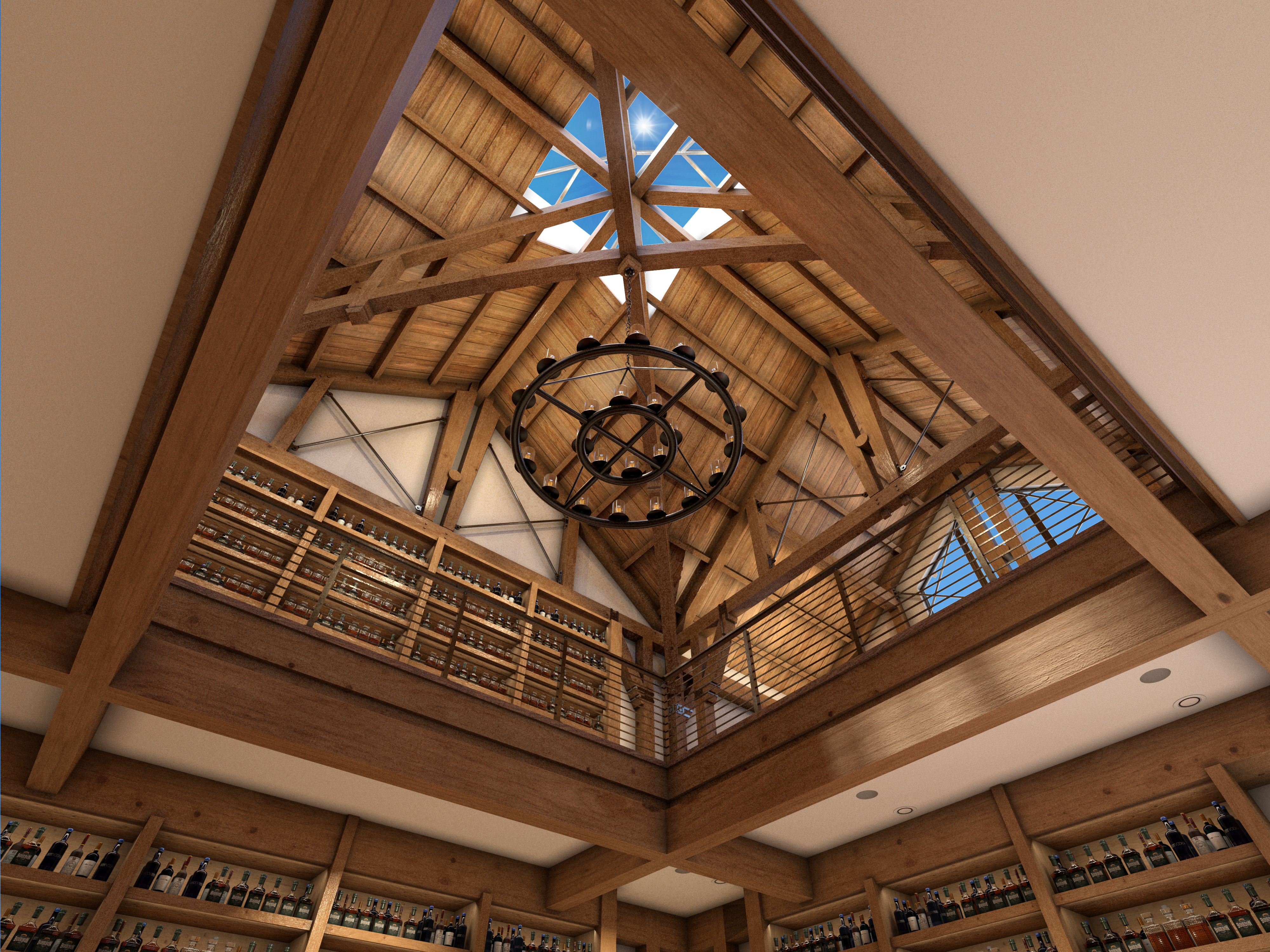
You want a home that feels rich in timber without unnecessarily consuming it.
That’s where architecture becomes a financial tool.
2. Expression vs. Excess
A well-designed timber home balances visual impact with material efficiency, avoiding overly bulky or excessive structural elements.
The common mistake
A lot of people assume:
“If I’m doing timber, I want to see timber everywhere.”
So projects end up with:
- Oversized beams
- Redundant structural elements
- Heavy, bulky aesthetics
And with that…
Costs climb fast.
What we focus on instead
At Tabberson, we design for:
- Strategic timber placement
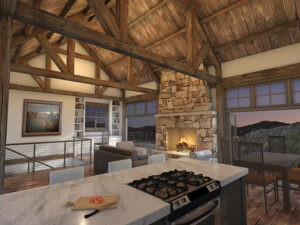
- Clean structural expression
- Moments of impact rather than overload
The real insight
Timber should feel intentional.
Not overwhelming.
Because when everything is heavy… nothing stands out.
3. The 15% Rule (And Why It Matters)
A good benchmark is keeping the structural timber frame around 15% of the total project cost to maintain balance and affordability.
Why this benchmark exists
Through experience, we’ve found:
When timber exceeds ~15% of total construction cost:
- The project starts to lose financial balance
- Budgets get strained quickly
- Clients begin compromising elsewhere
What happens if you ignore it?
You might get:
- A visually impressive frame
- But at the expense of interiors, site work, or overall livability
The real insight
A great home isn’t just about structure.
It’s about allocation.
Where your money goes matters just as much as how much you spend.
4. Why Architects Matter More Than You Think
Architects play a critical role in controlling timber home costs by designing efficient structures that maximize impact without unnecessary material use.
This is where projects go right—or wrong
Without architectural oversight:
- Timber can be overused
- Structural systems become inefficient
- Costs escalate without adding real value
With the right architect:
- Every beam has purpose
- Every connection is intentional
- Every dollar works harder
The real insight
In timber homes, design isn’t just aesthetic.
It’s economic strategy.
The Bigger Picture: Cost Is a Design Decision
Most people approach cost like it’s fixed.
It’s not.
In custom homes—especially timber homes—cost is shaped early:
- By how you design
- By how you allocate materials
- By how intentional you are with expression
The difference between a $1.5M home and a $2M home often isn’t size.
It’s decisions.
FAQ
Are timber homes always more expensive than conventional homes?
Not necessarily.
They can be, but efficient design can keep costs competitive while delivering a higher level of craftsmanship and character.
What is a “board foot” in timber construction?
It’s a unit of measurement for wood volume.
It helps quantify exactly how much timber is being used, which directly impacts cost.
Can I reduce cost by using less timber?
Yes—but it needs to be done strategically.
Reducing timber without design intent can hurt the aesthetic, while smart placement can maintain impact and save money.
Why do some timber homes feel bulky or heavy?
Because of overuse or poor proportioning.
Too many large structural elements can overwhelm the design and increase cost without improving the experience.
Where Tabberson Fits In
At Tabberson, we don’t just design timber homes.
We engineer the experience of timber.
We model it.
We test it.
We refine it.
So you get:
- The warmth and character of timber
- Without unnecessary cost
- And without compromise
A timber home shouldn’t feel excessive.
It should feel precise.
Because when every beam has a purpose, every dollar does too.
If you’re thinking about building a timber home, don’t just ask how much it costs.
Ask how well it’s designed.
That’s where the real difference is made.