When you’re building a custom timber home, you’re not just investing in square footage. You’re investing in experience.
One of the most common concerns high-end homeowners have is uncertainty:
- Will it look the way I imagine?
- Will the materials feel authentic?
- Will the space actually feel the way the plans suggest?
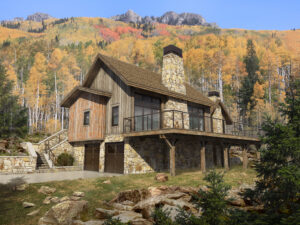
At Tabberson Architects, architectural rendering is not marketing fluff. It is a design tool. Senior Project Designer Chris Simmons leads a visualization process that helps clients see, feel, and emotionally connect with their home long before construction begins.
Here is how that process works.
Why Lighting Comes First in Architectural Rendering
“The first thing I think of when starting a render is the lighting.”
Chris is clear about this. Light and shadow are everything.
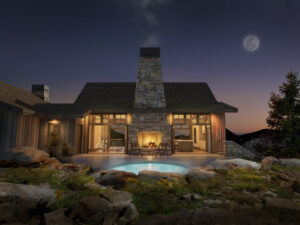
“Light and shadow are so important to set the mood of the scene and convey the experience of the space.”
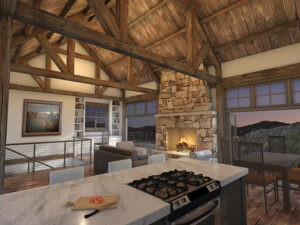
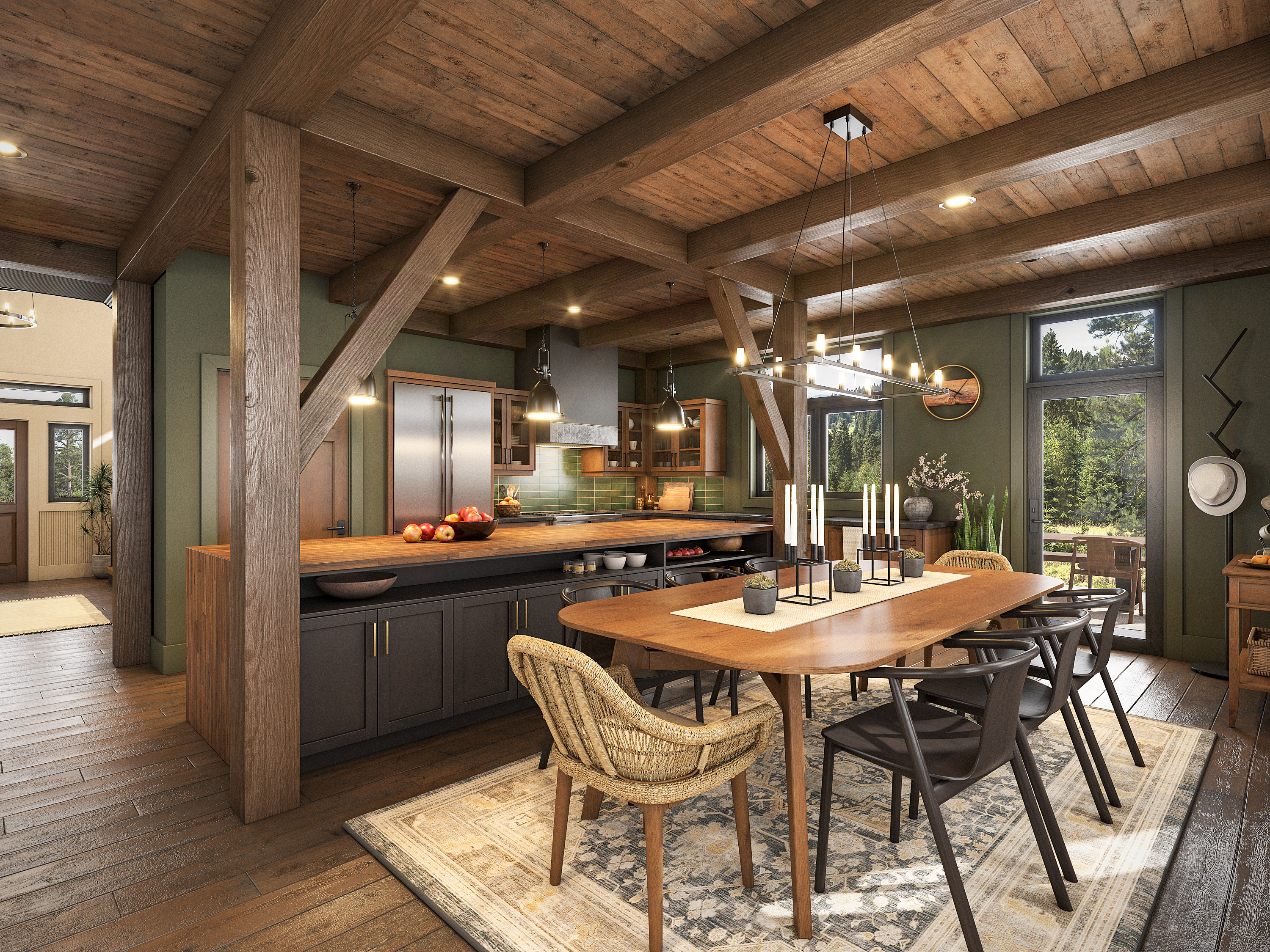
In timber architecture especially, lighting reveals texture, depth, and warmth. A timber beam under flat lighting looks ordinary. Under directional natural light, it becomes sculptural.
For luxury homeowners searching for:
- custom timber home architect
- modern timber home design
- timber frame house architect near me
Lighting is not decorative. It defines how the space will feel every day.
Rendering begins with daylight strategy because real architecture begins with light.
What Makes a Render Truly Communicate Architecture?
Many firms can produce a technically correct rendering. Fewer can produce one that feels real.
“I think every render should focus on storytelling in some way.”
Chris explains that materials and lighting are foundational, but storytelling is what elevates a render.
“What makes a render special is if the client can imagine themselves living in the space.”
He often introduces:
- Specific objects
- Subtle imperfections
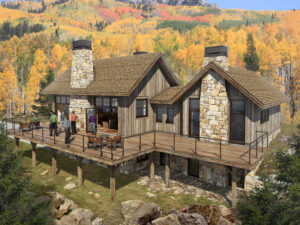
- Signs of motion and activity
- Slight variation in materials
“I often use specific objects and imperfections in materials to portray that lived-in quality.”
High-end homes should not feel staged. They should feel inhabited. A great architectural rendering allows you to see your future in the space.
How Tabberson Ensures Timber Looks Authentic, Not Digital
Timber is one of the most expressive structural materials in architecture. It is also one of the easiest to render poorly.
Chris approaches it with discipline.
“I study real-world interior timber frame photography in all sorts of environments and lighting situations in order to understand the visual characteristics of wood.”
The key insight?
“Natural imperfections and the uniqueness of every single timber beam is what makes it so special and that should be highlighted and celebrated.”
Wood grain is not uniform. Timber beams are not identical. Variation is the beauty.
Even smaller details are modeled with intention.
“For example, a shaker style wood cabinet door would be modeled with a center panel surrounded by two rails and two stiles, and each individual piece would be textured with the wood grain going in the appropriate direction.”
Even if a client does not consciously notice those details, they feel them. That level of realism builds trust.
For homeowners investing $1M+ in a custom home, that trust matters.
When Does Architectural Rendering Start?
Earlier than most people expect.
“At Tabberson Architects we start visualizing through renderings as early as the schematic design phase using massing models and digital daylighting studies.”
During schematic design:
- Massing models test form and proportion
- Daylighting studies evaluate how sun interacts with the structure
- Early 3D models guide layout decisions
As the project progresses into design development:
- Materials are refined
- Structural systems are coordinated
- 3D models become increasingly detailed
In the final stages:
“Photorealistic renders allow our clients to see what they are getting and to feel confident in their design before ever breaking ground.”
Rendering is not an afterthought. It is integrated into the entire architectural process.
Balancing Realism and Atmosphere in Luxury Home Renderings
A technically perfect model is not enough.
“I think you have to ground the scene with realistic materials, lighting, and accurate models, and then overlay that with elements of storytelling and intentional composition to create the mood and atmosphere you’re trying to portray.”
Realism provides credibility.
Atmosphere provides emotion.
The best architectural visualizations achieve both.
What Should Clients Feel When They See Their Render?
Chris’ answer is simple and direct.
“Not only do I hope they get excited and love the renders, I hope they feel a strong personal connection with the space and can picture their future there.”
Excitement is good.
Connection is better.
When clients can picture their life unfolding inside the design, the architecture has already begun to succeed.
FAQ: Architectural Rendering for Custom Timber Homes
What is architectural rendering?
Architectural rendering is a 3D visualization process that creates realistic images of a home before construction begins.
When should renderings start in a custom home project?
At Tabberson Architects, rendering begins during the schematic design phase and continues through design development.
Why is lighting so important in renderings?
Lighting sets mood, defines materiality, and conveys how a space will actually feel in real life.
How do renderings help luxury homeowners?
They reduce uncertainty, clarify design decisions, and allow clients to emotionally connect with their future home before construction starts.
TLDR: How Tabberson Architects Uses Rendering to Elevate Custom Timber Homes
Tabberson Architects begins architectural rendering early in schematic design, focusing first on lighting, then material authenticity and storytelling. By modeling real construction details and celebrating natural timber imperfections, their renderings help luxury homeowners confidently visualize and emotionally connect with their future home before construction begins.