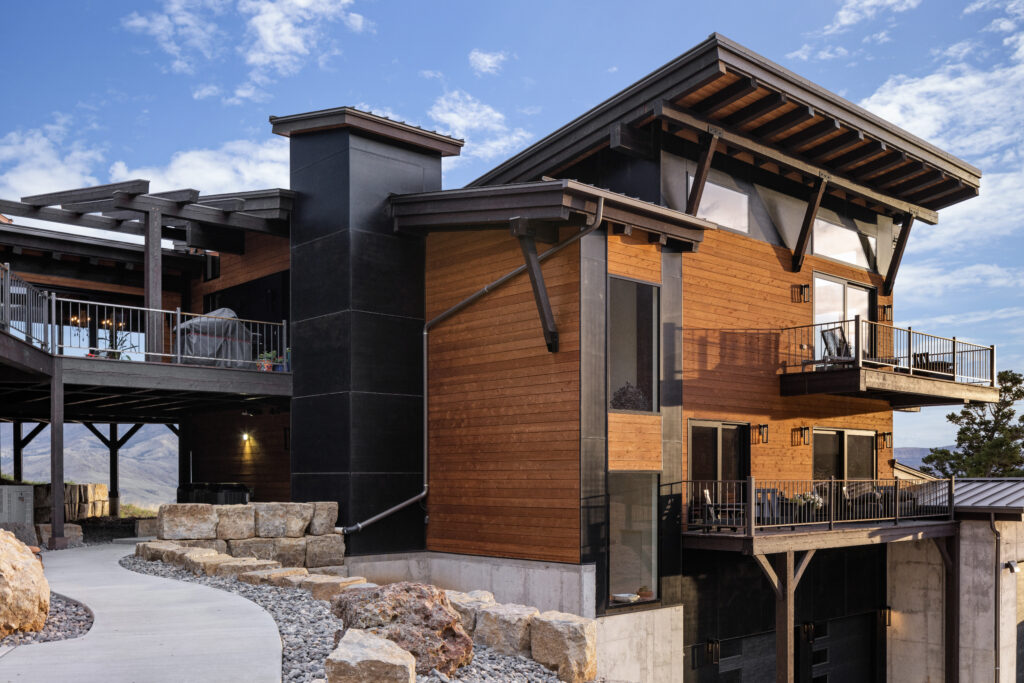
A conversation with Ray Wilk, Senior Project Designer at Tabberson Architects
Snow is not an afterthought in architecture. It is a defining force!
In a recent conversation with Ray Wilk, Senior Project Designer at Tabberson Architects, we discussed how snow influences everything from structure and energy performance to aesthetics and daily livability. What emerged was a clear philosophy: architecture must respond honestly and intelligently to its setting, and snow is a critical part of that setting.
Snow as Part of the Architectural Setting
Snow is not a separate condition. It is embedded in climate, and climate is inseparable from place.
As Ray put it, “Snow is part of climate, which is part of setting. And each piece of architecture that we design is designed for a particular setting, a piece of land. The topography of the land, the views, the surrounding context, and the climate, which includes snow.”
This mindset drives every design decision. From site orientation to material selection, snow informs how a home should sit on the land and how it should perform over decades.
Timber Frame and Snow Load: Thousands of Years of Precedent
In snowy climates, structure matters. Timber framing has endured for centuries because it works.
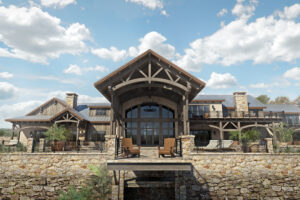
Ray explained, “Traditionally, timber frame has supported structurally buildings in snowy climates for thousands of years, and the stout frame literally holds up the weight of increased snow loads. And it’s part of the aesthetic and the functionality of a timber frame in the snowy climate.”
At Tabberson, timber framing is not only a stylistic choice. It is a structural response that aligns beauty with performance. The same systems that create warmth and character also provide the strength required to carry heavy snow loads safely.
Designing for Winter, Not Just Summer
Too often, homes are imagined only in ideal conditions. Tabberson’s approach considers all seasons equally.
“When we simulate material choices and color schemes, we’re not just thinking about what the design looks like on a sunny summer day, but also what does it look like in a snowy setting,” Ray said.
Snow transforms architecture. It highlights rooflines, frames massing, and amplifies contrast. In winter, thoughtful design becomes even more visible!
Colorado: Where Snow Dictates Design Decisions
In mountain regions like Colorado, snow is non-negotiable.
Ray was clear: “You can’t even have a discussion about designing a home without factoring in the snow.”
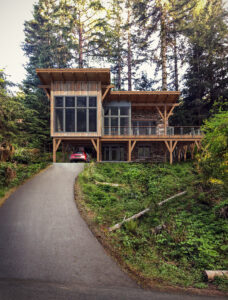
Roof forms must shed snow safely. Entrances and garage doors must be protected. Orientation becomes critical. “You want to face south so the snow and ice has some melting action with the southern solar exposure.”
This is where passive design strategies shine.
Passive Design Saves Energy and Cost
Thoughtful planning reduces the need for energy-intensive solutions.
Ray noted, “Driveway design and getting your garage door with some solar exposure and with a good roof overhang that doesn’t drop snow in front of your garage, all of that saves energy.”
The alternative is often expensive. Heated driveways, for example, consume significant energy and add long-term cost. “Especially when the alternative might be something like a heated driveway, which consumes a lot more energy than if it were designed thoughtfully with passive energy using the heat generated from the sun.”
In Colorado, this approach is especially effective. “The high altitude lends itself to a lot of sunny days, even in the winter.”
When Snow on the Roof Is a Good Thing
One of the most counterintuitive insights from the conversation was this: you often want snow to stay on the roof.
“With a high-performance roof, you actually want to see the snow sitting up there,” Ray explained. “If your snow is melting, that’s because you’re losing energy.”
A properly designed roof assembly supports snow structurally while preventing heat loss. When snow melts unevenly, it can create ice buildup at overhangs, leading to long-term issues!
Cold Roof Assemblies and Timber Frame Homes
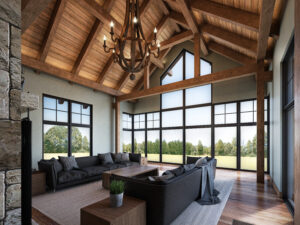
Timber frame homes often feature vaulted ceilings, which change how insulation must be handled.
“You’re more than likely going to have a vaulted ceiling, which means you do not have attic space,” Ray said. “You need to insulate what would otherwise be an attic, and that can lead to heat loss through conduction.”
The solution is a cold roof assembly.
“You add one extra layer on your roof to create a ventilation space for air movement. That air layer reduces heat loss through conduction. You actually want the roof to stay cold.”
This strategy improves durability, energy efficiency, and overall building performance.
Snow in Indiana: Light, Atmosphere, and Beauty
Snow does not only impact mountain homes.
When asked about Indiana, Ray responded simply: “I love it. I love the snow here in Indiana.”
He described the experience not in technical terms, but experiential ones. “I actually find the light qualities to be really inspiring, even at night. It just seems brighter outside.”
Indiana winters may be overcast, but snow transforms the environment. “Still the light effects. And I even noticed when we had snowfall, echoes forming outdoors. Very dynamic weather effect.”
For Ray, snow is as much about atmosphere as it is about performance. “Very fitting here in December around Christmas time too.”
Designing with Climate in Mind
Snow demands respect. When architecture responds intelligently to climate, the result is a home that performs better, lasts longer, and feels more connected to its environment.
At Tabberson Architects, snow is not a problem to solve. It is a design partner!
By embracing climate, structure, and passive energy strategies, the firm creates homes that are resilient, efficient, and deeply rooted in place.